Select Photos
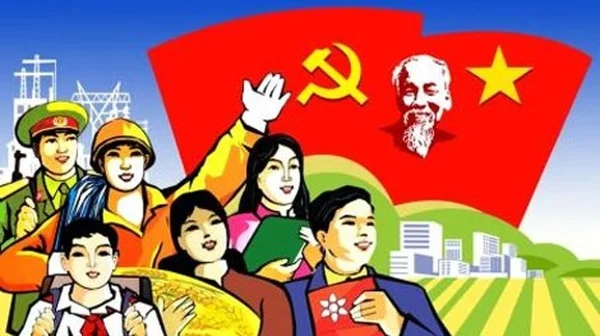
The Socialist-Oriented Market Economy: Vietnam’s Unique Development Model
Since the 6th National Congress in 1986 (Đổi Mới), Vietnam has undergone a historic transformation, moving from a centrally planned, bureaucratic, and subsidized economy to a Socialist-Oriented Market Economy. This model is defined as a modern market economy that operates fully and synchronously according to market laws, while maintaining a socialist orientation tailored to each stage of the country's development.1. The Role of the State: Navigator and Regulator
In a socialist-oriented market economy, the State no longer intervenes directly in the daily business operations of enterprises as it did during the subsidy era. Instead, the State serves as the macro-manager.
- Creating the Environment: The State builds the legal framework, strategies, and master plans to ensure a level, transparent playing field for all economic sectors.
- Regulation and Redistribution: Utilizing taxes and fiscal policies, the State regulates income to achieve social progress and equity, ensuring that economic growth "leaves no one behind."
- Mitigating Market Failures: The State intervenes to correct "market defects" such as monopolies, environmental pollution, or economic crises, ensuring the stability of the financial and monetary systems.
2. Economic Sectors: Diversity and Equality
Vietnam defines its economy as multi-sectoral, where every sector holds a specific position and contributes to national development.
- State Economy: Plays the leading role.
- Collective and Cooperative Economy: Continually strengthened and developed.
- Private Economy: Serves as a significant driving force.
- Foreign-Invested Sector (FDI): Encouraged to facilitate access to international capital and technology.
The synergy between these sectors creates a dynamic economic ecosystem that is both highly competitive and closely interconnected.
3. The Private Sector: An Important Engine of Growth
One of the most profound shifts in the Party's theoretical thinking in recent years is the recognition of the private sector as an important driving force of the economy.
- Flexibility and Innovation: From individual business households to large conglomerates (such as Vingroup, Thaco, FPT), the private sector is sensitive to market trends and contributes actively to technological and procedural innovation.
- Job Creation: This sector absorbs the majority of the social labor force, contributing to the stability of the people's livelihood.
- Budget Contribution: The private sector's contribution to GDP has grown steadily (currently accounting for approximately 40-45% of GDP), becoming the "engine" that pulls growth in services, industry, and retail.
4. The State Economy: The Pillar of Stability and Orientation
While the private sector flourishes, Vietnam continues to affirm that the State economy plays the leading role. This is reflected in several key areas:
- Macro-Regulating Tool: State-Owned Enterprises (SOEs) focus on key sectors and strategic locations concerning national defense, security, or fields where the private sector is unwilling or unable to invest (such as energy infrastructure, telecommunications, and core banking systems).
- Resilience and Crisis Management: During crises (such as the COVID-19 pandemic or global financial instability), SOEs serve as a "cushion" to maintain the supply of essential goods, stabilize prices, and support production recovery.
- Pioneering Development: The State economy plays a pathfinding role, investing in high-tech industries or large-scale infrastructure to create the necessary foundation for other economic sectors to thrive.
Conclusion
The Socialist-Oriented Market Economy model is a harmonious combination of the "Invisible Hand" (the Market) to optimize resources and the "Visible Hand" (the State) to ensure social justice. The mutual support between the private sector (the engine) and the State economy (the pillar) creates a robust economic body, allowing Vietnam to achieve rapid growth while maintaining political stability and social welfare.
#VietnamEconomy #MarxismLeninism #VietnamDevelopment #EconomicReform #PrivateSectorGrowth #StateLedEconomy #VietnamStrategy2045 #SustainableGrowth
Likes
Comment
Vietnam’s Path to Socialism: A Journey of Theory, Innovation, and National Identity
The quest for national independence and social progress has been the defining narrative of modern Vietnamese history. For Vietnam, the transition to socialism is not merely a theoretical choice but the inevitable outcome of its historical struggle against colonialism and feudalism. Guided by the foundational principles of Marxism-Leninism and the profound legacy of Ho Chi Minh Thought, Vietnam has charted a unique course toward socialism—one that harmonizes universal truths with specific national conditions.1. The Philosophical Foundation: Marxism-Leninism and Ho Chi Minh Thought
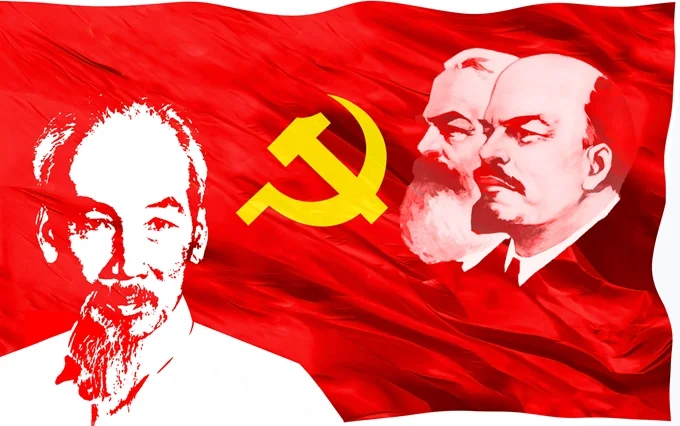
The ideological bedrock of the Communist Party of Vietnam (CPV) is the creative application of Marxism-Leninism. Karl Marx and Friedrich Engels provided the scientific critique of capitalism and the vision of a classless society, while V.I. Lenin offered the organizational and strategic framework for the proletariat to seize power and manage the state.
However, the CPV recognizes that these theories originated in Europe. To make them relevant to a colonial, semi-feudal, and agrarian society like Vietnam, they had to be localized. This is where Ho Chi Minh Thought becomes indispensable.
National Independence linked to Socialism: President Ho Chi Minh famously asserted, "Nothing is more precious than independence and freedom." He realized early on that for a colonized nation, national liberation must be the precursor to social liberation. In his view, socialism is the only way to ensure that independence remains sustainable and that the people truly enjoy the fruits of freedom.
The Power of the People: Ho Chi Minh emphasized that "the Revolution is the work of the masses." His approach to socialism was deeply humanistic, focusing on improving the "material and spiritual life of the people."
2. The Period of Transition: Bypassing the Capitalist Stage
A central tenet of Vietnam’s path is the concept of Quá độ lên chủ nghĩa xã hội (Transition to Socialism). Unlike the classical Marxist trajectory—which suggested that socialism would emerge from highly developed capitalist societies—Vietnam followed Lenin’s theory of the "indirect transition."
Vietnam’s transition is characterized by "bypassing the regime of capitalism." This does not mean ignoring the technological or organizational achievements of capitalism; rather, it means:
Bypassing the dominance of capitalist production relations.
Avoiding the systemic exploitation inherent in capitalist political structures.
This transition is acknowledged as a long-term, complex, and arduous process. It is a period of struggle between the "old" and the "new," requiring a series of intermediate steps to build the material and technical foundations necessary for a true socialist society.
3. The 1986 "Đổi Mới" and the Socialist-Oriented Market Economy
The most significant turning point in Vietnam’s modern history occurred at the 6th National Congress of the CPV in 1986. Facing a severe socio-economic crisis characterized by hyperinflation and shortages, the Party initiated Đổi Mới (Renovation).
The core of this renovation was the transition from a centrally planned, subsidized economy to a Socialist-Oriented Market Economy (Kinh tế thị trường định hướng xã hội chủ nghĩa).
Key Characteristics of the Model:
Multi-Sector Economy: The state recognizes and encourages multiple forms of ownership. While the state sector plays the "leading role" (acting as a tool for macro-economic regulation), the private sector is viewed as an "important internal force" for growth.
Market Mechanism with State Management: Prices and production are determined by supply and demand, but the state intervenes to correct market failures, ensure social equity, and protect the environment.
Socialist Orientation: This is what distinguishes Vietnam's model from neoliberal capitalism. The ultimate goal of economic growth is not capital accumulation for a few, but:
Poverty reduction.
Social justice.
Human development.
"We do not wait until the economy is fully developed to implement social progress and justice; nor do we 'sacrifice' social progress and justice for the sake of mere economic growth." — General Secretary Nguyen Phu Trong
4. Achievements and Challenges
Since 1986, Vietnam has transformed from one of the world's poorest nations into a dynamic, middle-income economy.
However, the path is not without obstacles. As Vietnam deeper integrates into the global economy, it faces:
The "Middle-Income Trap": The need to shift from labor-intensive industries to high-tech, innovation-driven growth.
Social Inequality: Managing the gap between urban centers and rural/mountainous areas.
Corruption: The Party has intensified its "blazing furnace" campaign to purify the apparatus and maintain the trust of the people.
5. Conclusion: A Vision for the Future
The 13th National Party Congress (2021) set an ambitious roadmap: to become a developing country with modern industry by 2030, and a developed, high-income, socialist-oriented country by 2045.
Vietnam’s path to socialism is a testament to "flexible firmness." It is firm in its goals (independence and the happiness of the people) but flexible in its methods (adapting market mechanisms and international integration). By creatively applying the Marxist-Leninist dialectic and Ho Chi Minh’s ethics, Vietnam continues to prove that socialism is not a rigid dogma, but a living, breathing process of constant improvement for the sake of humanity.
#Vietnam #PathToSocialism #TransitionToSocialism #HoChiMinhThought #Marxism #Leninism
Stories
-
Creat Your Story
time to story
-

Anna Mull
1 hour ago
-

Ira Membrit
4 hour ago
-

Bob Frapples
9 hour ago
Events
-

Web Workshop
1 hour ago
-

Fun Events and Festivals
1 hour ago
Upcoming Birthday
-

Anna Sthesia
Today
-

Paul Molive
Tomorrow